

Flowers that start with V letter may not be as common as roses or daisies, but they offer incredible beauty, fragrance, and diversity. From colorful garden favorites like Verbena and Viola to exotic plants such as the Vanilla Orchid and Voodoo Lily, these flowers can enhance any landscape with their unique charm.
You’re a gardener looking for new plants to grow or simply curious about flowers beginning with V, this guide will introduce you to 16 stunning varieties, complete with images, growing information and fascinating facts.
1. Verbena
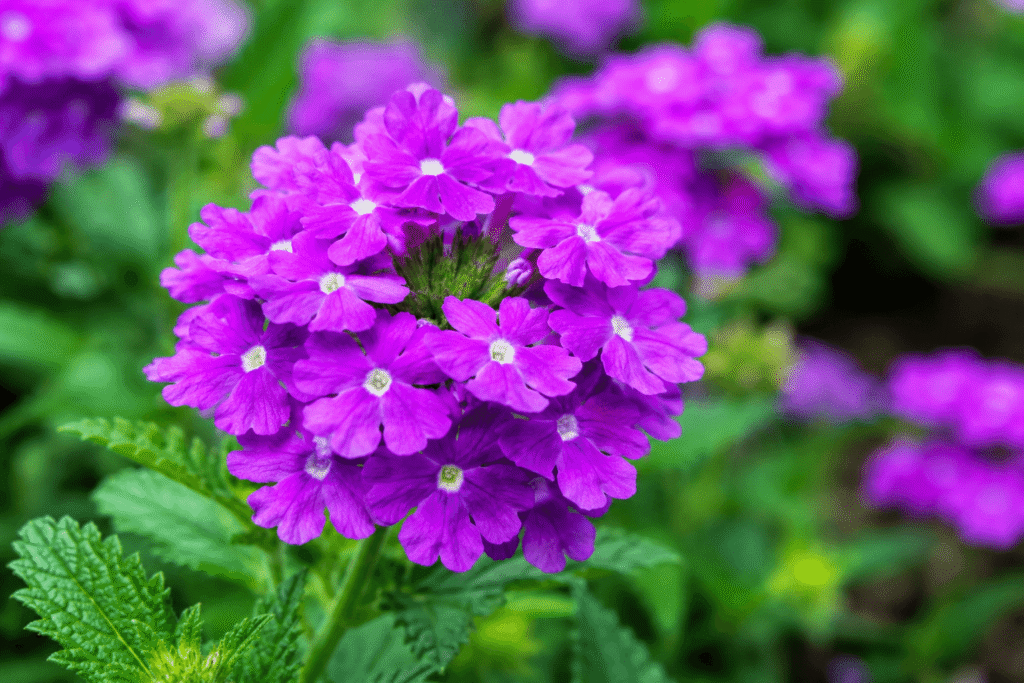
Verbena is one of the most popular flowering plants for gardens, hanging baskets, and containers. It produces clusters of tiny flowers that bloom continuously from late spring until frost. The plant is known for its vibrant colors and ability to attract butterflies and bees.
Native to tropical and subtropical regions, Verbena thrives in sunny locations and can tolerate heat and drought once established. Gardeners often choose it because it requires little maintenance while providing months of colorful blooms.
Growing Information
- Botanical Name: Verbena spp.
- Plant Type: Annual or perennial
- Sunlight: Full sun
- Soil: Well-drained soil
- Height: 6–36 inches
- Bloom Season: Spring through fall
Interesting Fact
In ancient times, Verbena was considered a sacred herb and was used in religious ceremonies and traditional medicine.
2. Viola
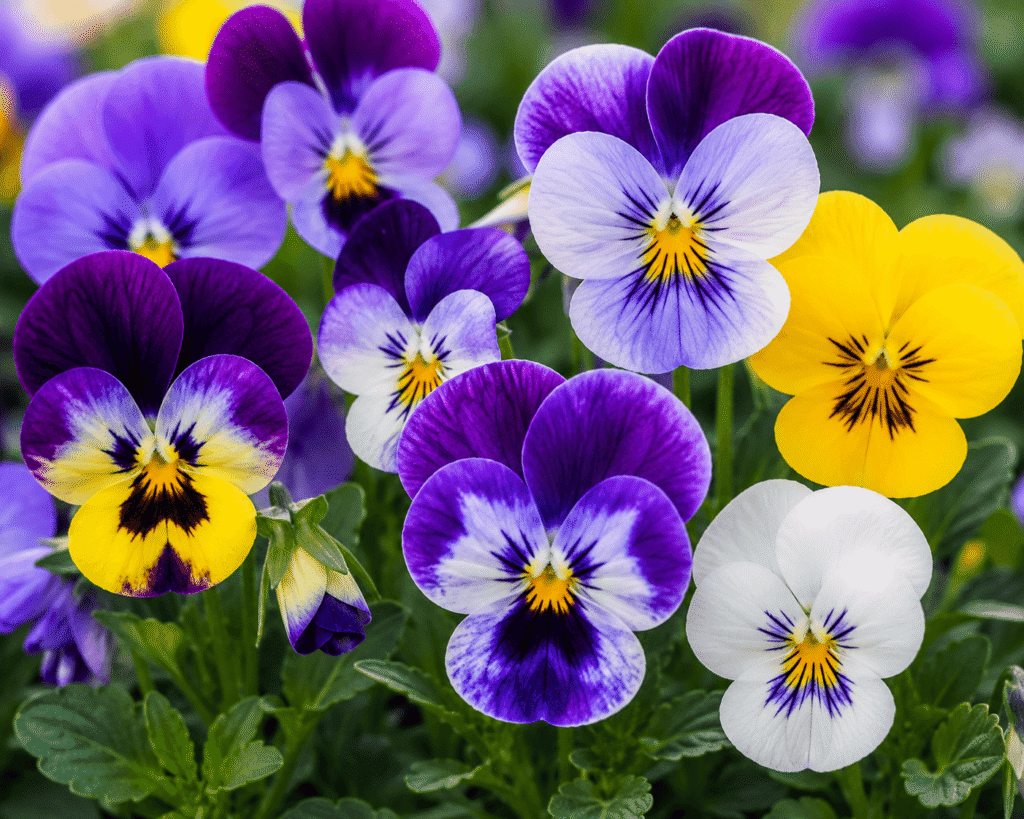
Violas are beloved cool-season flowers that brighten gardens with cheerful blooms. Closely related to pansies, these flowers come in a wide range of colors and often feature attractive markings on their petals.
Their compact size makes them perfect for borders, flower beds, containers, and window boxes. Violas are also edible, making them popular for decorating desserts and salads.
Growing Information
- Botanical Name: Viola spp.
- Plant Type: Annual or perennial
- Sunlight: Full sun to partial shade
- Soil: Rich, moist soil
- Height: 4–10 inches
- Bloom Season: Spring and fall
Interesting Fact
Viola flowers symbolize innocence, love, and remembrance in many cultures.
3. Virginia Bluebells
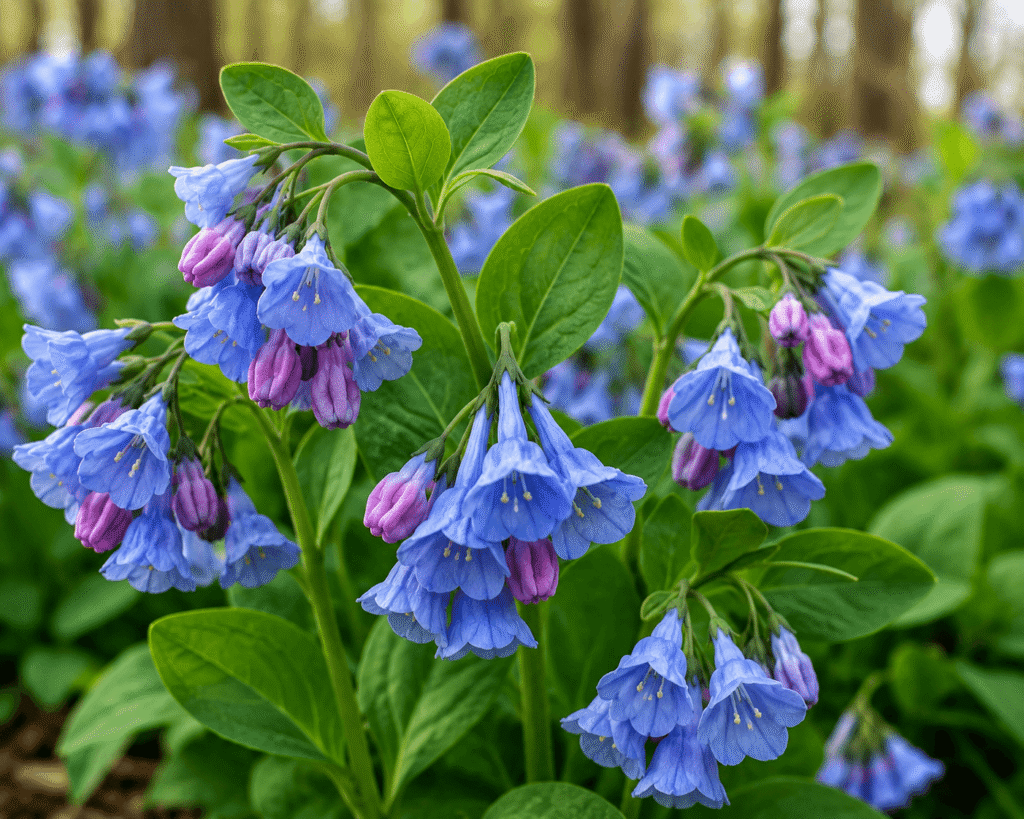
Virginia Bluebells are stunning native wildflowers that create carpets of blue in woodland gardens during spring. Their flowers begin as pink buds before opening into beautiful bell-shaped blue blossoms.
These plants thrive in shady, moist environments and are particularly attractive when planted in large groups. They are also an important early-season nectar source for bees and butterflies.
Growing Information
- Botanical Name: Mertensia virginica
- Plant Type: Perennial
- Sunlight: Partial shade
- Soil: Moist, rich soil
- Height: 12–24 inches
- Bloom Season: Early spring
Interesting Fact
Virginia Bluebells go dormant after flowering, disappearing until the following spring.
4. Vinca
Vinca, commonly known as Periwinkle, is a tough flowering plant valued for its ability to withstand hot and dry conditions. It produces attractive five-petaled flowers throughout the growing season.
Because of its resilience, Vinca is often planted in areas where other flowers struggle. It works well in borders, containers, and mass plantings.
Growing Information
- Botanical Name: Catharanthus roseus
- Plant Type: Annual
- Sunlight: Full sun to partial shade
- Soil: Well-drained soil
- Height: 6–18 inches
- Bloom Season: Spring through frost
Interesting Fact
Vinca has been used in medical research because it contains compounds used in certain cancer treatments.
5. Valerian
Valerian is a fragrant flowering plant known for its clusters of delicate pink or white flowers. It is commonly grown in cottage gardens and naturalized landscapes.
The flowers attract butterflies and beneficial pollinators, while the roots have a long history of use in herbal remedies.
Growing Information
- Botanical Name: Valeriana officinalis
- Plant Type: Perennial
- Sunlight: Full sun
- Soil: Moist, fertile soil
- Height: 3–5 feet
- Bloom Season: Late spring to summer
Interesting Fact
Valerian root has been used for centuries as a traditional sleep aid.
6. Velvet Flower
The Velvet Flower is admired for its rich color and velvety texture. Its luxurious appearance makes it a favorite for decorative gardens and floral arrangements.
The soft petals create a unique visual effect that stands out among other flowering plants.
Growing Information
- Plant Type: Ornamental flowering plant
- Sunlight: Full sun
- Soil: Well-drained soil
- Height: 12–24 inches
- Bloom Season: Summer
Interesting Fact
The flower’s velvety texture inspired its common name.
7. Venus Looking Glass
Venus Looking Glass is a charming wildflower with star-shaped violet-blue blooms. It is often found growing in meadows, roadsides, and naturalized gardens.
Its delicate flowers open in the morning sunlight, creating a beautiful display throughout spring and summer.
Growing Information
- Botanical Name: Triodanis perfoliata
- Plant Type: Annual wildflower
- Sunlight: Full sun
- Height: 6–30 inches
- Bloom Season: Spring to summer
Interesting Fact
The shiny seed capsules inspired the plant’s unusual name.
8. Voodoo Lily
Voodoo Lily is one of the most unusual flowering plants in the world. It produces a large, dramatic bloom that resembles a tropical sculpture.
Although beautiful, the flower emits a strong odor designed to attract pollinating insects.
Growing Information
- Botanical Name: Amorphophallus konjac
- Plant Type: Tropical perennial
- Sunlight: Partial shade
- Height: Up to 6 feet
- Bloom Season: Spring
Interesting Fact
Its bloom can be over a foot wide and is often grown as a conversation piece in specialty gardens.
9. Variegated Solomon’s Seal
Variegated Solomon’s Seal is a beautiful woodland perennial prized for its elegant arching stems and eye-catching foliage. The leaves feature creamy-white edges that brighten shady garden spaces throughout the growing season. In spring, delicate white bell-shaped flowers dangle beneath the stems, creating a graceful and almost hidden display.
This plant thrives in shaded borders, woodland gardens, and naturalized landscapes. It is relatively low-maintenance and spreads slowly over time, forming attractive clumps. Even after the flowers fade, the decorative foliage continues to add interest to the garden until autumn.
Growing Information
- Botanical Name: Polygonatum odoratum ‘Variegatum’
- Plant Type: Perennial
- Sunlight: Partial shade to full shade
- Height: 1–3 feet
- Bloom Season: Spring
Interesting Fact
The plant’s name comes from the scars left on its rhizomes, which were said to resemble the seal of the biblical King Solomon.
10. Variegated Iris
Variegated Iris is an ornamental iris variety known for both its striking foliage and fragrant flowers. The leaves feature attractive cream and green stripes, making the plant decorative even when it isn’t blooming. During late spring, large lavender-blue flowers emerge, adding vibrant color and elegance to the landscape.
This iris is commonly used in cottage gardens, mixed borders, and water-side plantings. It prefers sunny locations and well-drained soil, rewarding gardeners with years of dependable blooms.
Growing Information
- Botanical Name: Iris pallida ‘Variegata’
- Plant Type: Perennial
- Sunlight: Full sun
- Height: 2–3 feet
- Bloom Season: Late spring
Interesting Fact
The flowers produce a sweet fragrance that is often compared to grapes.
11. Violet Cress
Violet Cress is a low-growing perennial that creates a stunning carpet of purple flowers in spring. Its dense growth habit makes it perfect for rock gardens, retaining walls, pathways, and ground cover plantings. When in bloom, the plant becomes almost completely covered with vibrant flowers, creating a colorful display.
This hardy flower thrives in sunny locations and can tolerate poor soil conditions. Gardeners often use it to soften hard edges and add color to difficult planting areas.
Growing Information
- Botanical Name: Aubrieta species
- Plant Type: Perennial
- Sunlight: Full sun
- Height: 4–8 inches
- Bloom Season: Spring
Interesting Fact
Violet Cress is often planted along stone walls where its flowers can cascade beautifully over the edges.
12. Velvet Bells
Velvet Bells are admired for their colorful foliage and delicate flower spikes. The leaves come in shades of burgundy, silver, green, bronze, and purple, providing year-round interest in many gardens. During late spring and summer, small bell-shaped flowers rise above the foliage on slender stems.
These plants perform especially well in shaded gardens and woodland settings. Their attractive leaves make them valuable landscape plants even when not in bloom.
Growing Information
- Botanical Name: Heuchera varieties
- Plant Type: Perennial
- Sunlight: Partial shade
- Height: 12–24 inches
- Bloom Season: Late spring to summer
Interesting Fact
Many modern Heuchera varieties are grown primarily for their colorful foliage rather than their flowers.
13. Virgin’s Bower
Virgin’s Bower is a fast-growing native vine that produces masses of fragrant white flowers in late summer. The blossoms cover the plant so heavily that the foliage is often barely visible during peak bloom. Its sweet fragrance attracts bees, butterflies, and other pollinators.
Because of its vigorous growth habit, Virgin’s Bower is often used to cover fences, arbors, and trellises. It can quickly create a lush, flowering screen in the garden.
Growing Information
- Botanical Name: Clematis virginiana
- Plant Type: Perennial vine
- Sunlight: Full sun to partial shade
- Height: Up to 20 feet
- Bloom Season: Summer
Interesting Fact
After flowering, the plant develops fluffy silver seed heads that provide visual interest well into winter.
14. Velvetleaf Blueberry Flower
Before producing delicious berries, Velvetleaf Blueberry shrubs display clusters of small, bell-shaped flowers in spring. These delicate blossoms range from white to pale pink and attract numerous pollinators, including bees and butterflies.
The shrub is native to North America and thrives in acidic soils. In addition to its flowers and fruit, it provides beautiful fall foliage, making it a valuable landscape plant throughout the year.
Growing Information
- Botanical Name: Vaccinium myrtilloides
- Plant Type: Shrub
- Sunlight: Full sun to partial shade
- Height: 1–3 feet
- Bloom Season: Spring
Interesting Fact
The flowers eventually develop into sweet blueberries that are enjoyed by birds, wildlife, and people.
15. Violet Wood Sorrel
Violet Wood Sorrel is a charming native wildflower that produces clusters of pinkish-purple blooms above attractive clover-like foliage. The flowers appear in spring and early summer, adding delicate color to woodland gardens and naturalized landscapes.
This plant spreads gradually through underground bulbs and can form attractive colonies over time. Its unique leaves fold closed at night and reopen in daylight, creating additional visual interest.
Growing Information
- Botanical Name: Oxalis violacea
- Plant Type: Perennial
- Sunlight: Partial shade
- Height: 6–12 inches
- Bloom Season: Spring to early summer
Interesting Fact
Both the leaves and flowers are edible and have a refreshing lemon-like flavor.
16. Viper’s Bugloss
Viper’s Bugloss is one of the most spectacular wildflowers for pollinator gardens. It produces tall flower spikes covered with hundreds of bright blue blossoms that bloom gradually from the bottom upward. The flowers are highly attractive to bees, butterflies, and other beneficial insects.
This drought-tolerant plant thrives in sunny, well-drained locations and is often found growing in meadows, roadsides, and wildflower gardens. Its vivid blue color makes it easy to spot from a distance.
Growing Information
- Botanical Name: Echium vulgare
- Plant Type: Biennial
- Sunlight: Full sun
- Height: 1–3 feet
- Bloom Season: Summer
Interesting Fact
A mature plant can produce thousands of nectar-rich flowers, making it one of the best plants for supporting pollinators.
Conclusion:
Flowers that start with V offer remarkable diversity, ranging from woodland wildflowers and colorful bedding plants to rare tropical species. Whether you’re planting a butterfly garden, creating a colorful flower bed, or simply exploring unique blooms, these flowers provide plenty of inspiration.
Adding a few of these beautiful V flowers to your landscape can bring vibrant color, fragrance, and pollinator activity throughout the growing season.


